
Quick answer
Start with where your days will happen—work, school, family—then choose an area of Greater Austin, not just “Austin.” In October 2026, the metro median sale price was $404,802 and the City of Austin median was $550,000 (Unlock MLS), and the metro unemployment rate was 3.7% in September (Texas Workforce Commission). Texas has no state personal income tax, but property taxes are local—about $2.12 per $100 of value in 2026 for a City of Austin and Austin ISD home before exemptions. After you arrive, register your vehicle within 30 days (with an emissions test first in Travis and Williamson counties) and get a Texas driver license within 90 days.
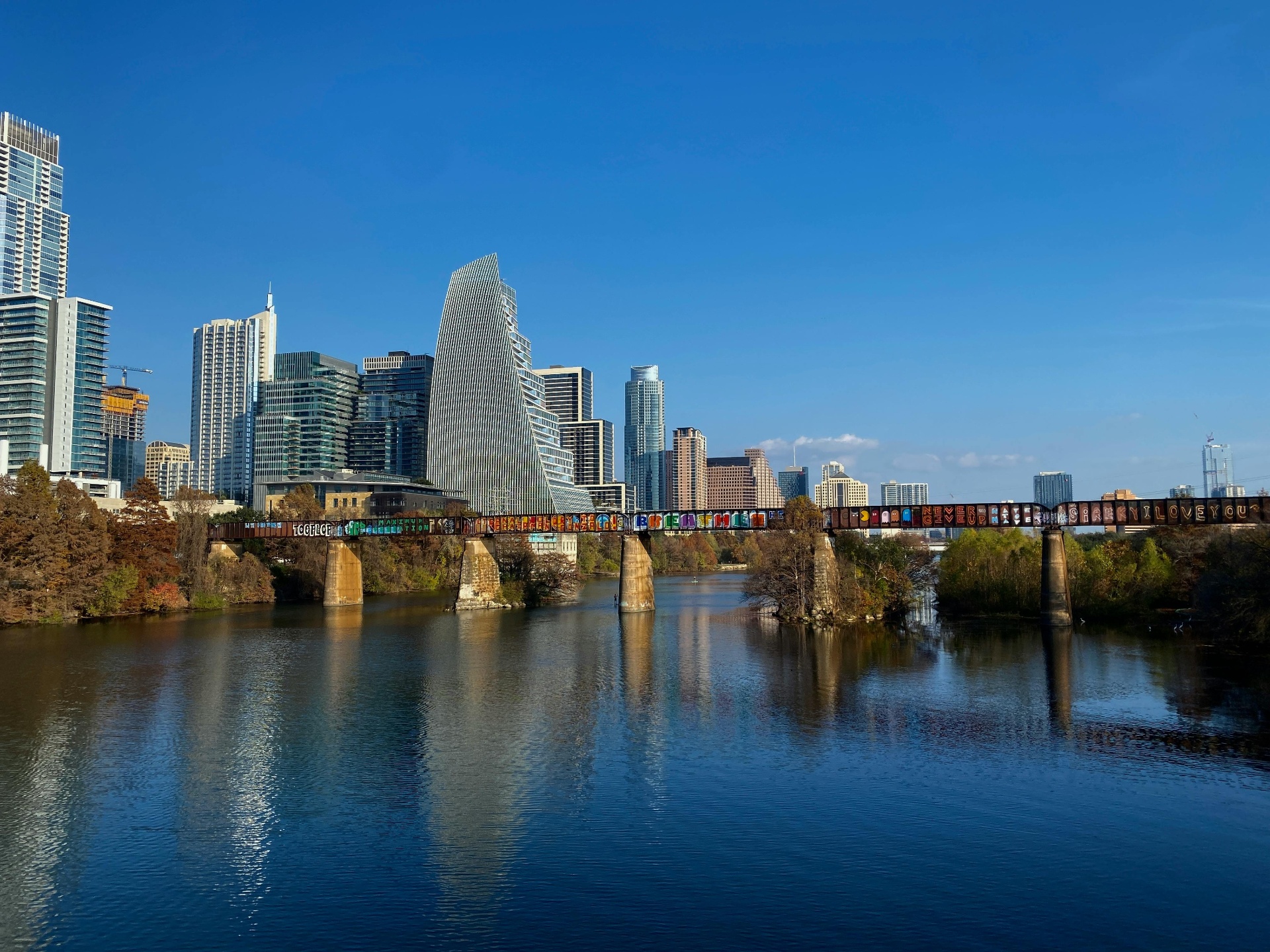
Austin at a glance
The verified numbers newcomers ask about most, in one place. Each one links back to its source in the list at the bottom of this page.
| Topic | What we know |
|---|---|
| Metro median sale price | $404,802 in October 2026 (-6.9% year over year) |
| City of Austin median sale price | $550,000 in October 2026 (0.0% year over year) |
| Metro MLS median rent | $2,100 a month in October 2026 (City of Austin: $2,195) |
| Metro months of inventory | 6.2 months in October 2026 |
| Metro unemployment rate | 3.7% in September 2026, vs. 4.3% statewide (Texas Workforce Commission, not seasonally adjusted) |
| State personal income tax | None |
| Sales tax | 6.25% state rate; local add-ons up to 2% (8.25% combined maximum) |
| Property tax, City of Austin + Austin ISD | About $2.12 per $100 of taxable value in 2026, before exemptions |
| School homestead exemption | $140,000 (plus $60,000 if 65+ or disabled) |
| Driver license deadline | Within 90 days of establishing residency |
| Vehicle registration deadline | Within 30 days; emissions test first in Travis and Williamson counties |
| Typical August high / January low | 97.8°F / 41.8°F (NOAA 1991–2020 normals, Camp Mabry) |
| Average yearly rainfall | About 36 inches, often in heavy bursts |
| Barton Springs Pool water | 68–70°F on average, year-round |
| Cedar pollen season | Typically mid-December through February |
Why people move to Austin (and the honest trade-offs)
I’ve lived here for two decades and watched Austin grow from a college-and-capitol town into a major metro. What still makes it special is the mix: a big-city job market, a small-town habit of saying hi on the trail, and a weekend that can start at Barton Springs and end at a dance hall.
What draws people
- No state personal income tax. More of each paycheck stays with you.
- A broad job base. State government, UT, health care, semiconductors, and tech—not one company town.
- Outdoor life all year. Spring-fed pools, greenbelts, lakes, and a 10-mile trail through downtown.
- Music, food, and festivals. The “Live Music Capital of the World,” barbecue, breakfast tacos, SXSW, and ACL.
What to plan for
- Property taxes are where Texas collects—budget for them by address.
- Summer heat. July and August highs average in the high 90s.
- Traffic and construction, including the multi-year rebuild of I-35 through central Austin.
- Flash floods, hail, and cedar fever. Each is manageable once you know to check for it.
What it actually costs to live here
Home prices
In October 2026, Unlock MLS reported a metro median sale price of $404,802 (-6.9% year over year) and a City of Austin median of $550,000 (0.0%). Unlock MLS said the metro dip mostly reflected more lower-priced homes selling, not a drop in individual home values. There were 6.2 months of inventory, and homes sold for 92.2% of their original list price on average.
| County | Includes | Median price | Months of inventory |
|---|---|---|---|
| Travis County | Austin, Pflugerville (part), Lakeway, Bee Cave, Manor, Del Valle | $480,000 (−4.9%) | 6.2 |
| Williamson County | Round Rock, Cedar Park, Leander, Georgetown, Hutto | $375,250 (−9.2%) | 5.6 |
| Hays County | Buda, Kyle, Dripping Springs, Wimberley, San Marcos | $371,080 (−4.9%) | 6.9 |
| Bastrop County | Bastrop, Elgin, Cedar Creek | $348,500 (+7.5%) | 7.8 |
Medians move with the mix of homes that sell, so treat them as a starting point. See the month-by-month table on my Austin median home price page and the full October market report.
Rent
The metro MLS median lease was $2,100 a month in October 2026, and $2,195 in the City of Austin. Expect an application fee, a deposit, and pet rent where pets are allowed.
Property taxes, with a real example
Property tax is local: your county, city, school district, and sometimes a community college, hospital district, MUD, or emergency services district each set a rate. For a home in the City of Austin and Austin ISD, the adopted 2026 rates add up to about $2.12 per $100 of taxable value:
| Taxing unit | Rate per $100 |
|---|---|
| Austin ISD | $0.9184 |
| City of Austin | $0.5799 |
| Travis County | $0.3862 |
| Central Health (hospital district) | $0.1329 |
| Austin Community College | $0.1036 |
| Combined | $2.1211 |
Illustration only: on a $550,000 home, that works out to about $11,666 a year with no exemptions. Once it’s your homestead, the $140,000 school exemption brings it to about $10,380. The City, county, and hospital district can offer their own optional homestead exemptions, which would lower it further. Suburbs have different rate stacks, so we’ll price each address separately. Never borrow a seller’s tax bill as your estimate; their exemptions may not match yours.
- Homestead exemption: apply with the appraisal district for your county (Travis, Williamson, Hays, or Bastrop), generally by April 30. Owners 65 or older or disabled get another $60,000 off school taxes.
- The 10% cap: once a home is your homestead, its taxable value generally can’t rise more than 10% a year, even if the market value jumps.
- Payment timing: bills go out in the fall and are due by January 31.
Sales tax
Texas collects 6.25% at the state level, and local add-ons can bring it to 8.25%, which is the rate inside the City of Austin. Most groceries and prescription drugs are exempt.
Insurance
Get homeowners quotes for the specific address early in your search, not after you’re under contract. Ask about the wind and hail deductible, since it’s often a percentage of the home’s value. Most homeowners and renters policies don’t cover flood damage, and a new National Flood Insurance Program policy typically has a 30-day waiting period. My floodplain buying guide walks through the checks.
Utilities
Your providers depend on the address. Inside its service area, the City of Austin runs Austin Energy and Austin Water. Elsewhere you might have a city utility like Georgetown Utility Systems, a co-op such as Pedernales Electric or Bluebonnet Electric, or, in areas open to retail competition, a plan you pick on the state’s Power to Choose site. Water may come from a city, a MUD, or a well. Summer air conditioning is the big swing in electric bills, so ask for 12 months of usage on any home you’re serious about.
Everyday costs
Most households need a car, so budget for insurance, registration, tolls, and parking. Downtown and campus-area parking is often paid. Internet options vary by street; AT&T Fiber, Google Fiber, and Spectrum serve parts of the area.
Want to see what you can comfortably afford? Try the buying power calculator, and if you’re buying your first home, look at Austin down payment assistance and Texas first-time homebuyer programs.
Where to live: Greater Austin areas
A starting map, not a ranking. People say “I’m moving to Austin,” but Greater Austin runs from Georgetown and Leander in the north to Buda and Kyle in the south, and west into the hills toward Dripping Springs. Start with your anchor points—work, school, family, and how you want weekends to feel.
By lifestyle
Walk to coffee and live music
Central, East, and South Austin—Hyde Park, Cherrywood, Holly, South Congress, South Lamar—plus downtown and Mueller condos and townhomes.
A bigger yard and newer construction
Round Rock, Pflugerville, Cedar Park, Leander, Georgetown, Hutto, Kyle, and Buda, where many newer subdivisions come with an HOA and sometimes a MUD.
Hills, views, and the lake
Westlake, Rollingwood, Lakeway, Bee Cave, and Dripping Springs. Expect more slope, more trees, and more due diligence on wildfire, septic, and insurance.
Lock-and-leave or downsizing
Downtown and Mueller condos, single-story homes in established neighborhoods, and age-restricted communities around Georgetown.
By part of town
Central Austin
Hyde Park · Tarrytown · Travis Heights · Zilker · Downtown
Older homes, condos, and infill side by side. Lot size, renovation and permit history, parking, and drainage can change block by block.
East Austin
East Austin · Mueller · Windsor Park · Cherrywood · Holly · University Hills
Established homes next to newer construction and planned communities. Read association documents and watch nearby development activity.
South Austin
South Congress · South Lamar · Barton Hills · Circle C Ranch
From close-in bungalows to master-planned subdivisions near the Wildflower Center. South of the river is not one commute—test yours.
North & Northwest Austin
Crestview / Brentwood · North Loop · Great Hills · Milwood
Close to The Domain and many north-side employers. Compare MoPac, US 183, and I-35 routes at the hours you’ll really drive.
West Austin & the lakes
Hill Country terrain, Lake Austin and Lake Travis nearby, and Lakeway and Bee Cave farther out. Check slope, drainage, wildfire exposure, and the district for the exact property.
Northern suburbs
Round Rock · Pflugerville · Cedar Park
Separate cities with their own utilities and taxing units—Georgetown, Leander, and Hutto too. Some subdivisions sit in a MUD (municipal utility district), which adds a line to the tax bill.
South & west edges
Buda, Kyle, and Dripping Springs are in Hays County, which doesn’t require a vehicle emissions test. Compare the commute, water and septic, and the full tax picture for each address.
Torn between two? Start with my Mueller vs Windsor Park comparison, or browse every neighborhood guide. Moving for a job? My work relocation guide goes deeper on selling a home elsewhere and commute corridors.
Schools and education
Greater Austin has more than a dozen public school districts, and a mailing address doesn’t tell you which one serves a home. An “Austin, TX” address can sit in Round Rock ISD, Leander ISD, or Pflugerville ISD. Here’s where the main districts are:
| Area | Public school districts |
|---|---|
| Most of the City of Austin | Austin ISD, with parts of the city in Del Valle, Manor, Pflugerville, Round Rock, Leander, and Eanes ISDs |
| West Austin and the hills | Eanes ISD (West Lake Hills, Rollingwood), Lake Travis ISD (Lakeway, Bee Cave), Dripping Springs ISD |
| North and northwest suburbs | Round Rock ISD, Leander ISD (Cedar Park, Leander, parts of northwest Austin), Georgetown ISD, Liberty Hill ISD |
| Northeast and east | Pflugerville ISD, Hutto ISD, Manor ISD, Elgin ISD |
| South and southeast | Hays CISD (Buda, Kyle), Del Valle ISD, Bastrop ISD |
How to check a school for a specific home
- Look up the address on the district’s own boundary or school-finder tool, since attendance zones change.
- Read the campus report on TXSchools.gov, where the Texas Education Agency publishes accountability ratings and campus data.
- Visit, talk to parents, and ask about the programs your child cares about: arts, athletics, dual language, special education, or advanced coursework.
- Ask about transfers, magnet and choice programs, charter schools, and private schools if the assigned campus isn’t the fit.
Fair housing guidelines mean I won’t rank schools or steer you toward or away from a neighborhood. I’ll help you find the official data and ask the right questions.
Colleges and universities
The University of Texas at Austin, St. Edward’s University, Huston-Tillotson University, Concordia University Texas, and Austin Community College are in Austin, with Southwestern University in Georgetown and Texas State University in San Marcos.
Jobs and the economy
The Austin metro’s unemployment rate was 3.7% in September 2026, below the 4.3% statewide rate, according to the Texas Workforce Commission. The economy leans on a mix of state government, the university, health care, semiconductors, manufacturing, and tech.
The region’s largest employers
Opportunity Austin, the Greater Austin Chamber’s economic development group, lists these organizations as employing 6,000 or more people in the region:
Amazon (fulfillment centers)
Distribution across the metro
Apple
Tech development, chip engineering, Americas Operations Center
Ascension Seton
Health care (headquartered here)
Austin ISD
Public education
Baylor Scott & White
Health care
City of Austin
Local government
Dell Technologies
Computer technology (headquartered in Round Rock)
Federal government
Government
H-E-B
Grocery retail, distribution, and a technology center
Round Rock ISD
Public education
Samsung Austin Semiconductor
Chip manufacturing and R&D
St. David’s HealthCare
Health care (headquartered here)
State of Texas
State government—Austin is the capital
Tesla
Vehicle and battery manufacturing, AI and chip design (headquartered here)
The University of Texas at Austin
Higher education
Where the work is
- Downtown and the Capitol: state agencies, law and finance, tech offices, and UT just to the north.
- North Austin and The Domain: Apple’s campus and many tech offices, with Dell’s headquarters in Round Rock.
- East and southeast: Tesla’s Gigafactory Texas near SH 130 and the airport, plus logistics and manufacturing.
- Northeast: Samsung’s chip plants in northeast Austin and Taylor, with suppliers spreading along US 79 and SH 130.
- Medical districts: hospitals and clinics across the metro, including Dell Medical School and Dell Seton Medical Center by UT.
Working remotely or hybrid? Choose the home first, then test the drive for your office days. Coworking spaces are common downtown, at The Domain, and in many suburbs.
Getting around
Most people here drive, so the main roads are worth learning: I-35 through the middle, MoPac (Loop 1) on the west side, US 183 to the northwest and east, US 290 / SH 71 to the southwest and the airport, and toll roads such as SH 130, SH 45, and 183A. If you’ll use the tolls, get a toll tag so you aren’t billed by mail at a higher rate.
TxDOT is rebuilding I-35 through central Austin, so expect lane closures for years. CapMetro runs the buses, the MetroRapid lines, and the MetroRail Red Line between Leander and downtown, and the Project Connect plan includes light rail. Check current routes and schedules from both ends of your trip. Austin-Bergstrom International Airport (AUS) is southeast of downtown.
Close-in neighborhoods can work with a bike, scooter, transit, and the occasional rideshare. In the suburbs, plan on a car for most errands. Before you commit to an address, drive the commute at your real travel times, in both directions.
Weather, month by month
Austin summers are hot. I won’t sugarcoat it. But spring and fall are why people fall in love with this place, and most winter days only need a light jacket. These are NOAA’s 30-year averages for Camp Mabry in central Austin:
| Month | Avg. high | Avg. low | Avg. rain |
|---|---|---|---|
| January | 62.5°F | 41.8°F | 2.64 in |
| February | 66.5°F | 45.8°F | 1.89 in |
| March | 73.3°F | 52.2°F | 2.88 in |
| April | 80.3°F | 58.9°F | 2.42 in |
| May | 86.9°F | 66.8°F | 5.04 in |
| June | 93.2°F | 72.9°F | 3.68 in |
| July | 96.6°F | 75.0°F | 1.96 in |
| August | 97.8°F | 75.1°F | 2.74 in |
| September | 91.4°F | 70.1°F | 3.45 in |
| October | 82.5°F | 60.8°F | 3.91 in |
| November | 71.5°F | 50.5°F | 2.92 in |
| December | 63.9°F | 43.4°F | 2.72 in |
Spring (March–May)
Bluebonnets along the highways, full patios, and SXSW. May is the wettest month on average, and spring storms can bring hail.
Summer (June–September)
Average highs in the 90s, with triple digits on many days. Locals shift outside time to early mornings and evenings, and Barton Springs stays cool.
Fall (October–November)
Our second spring: ACL Fest, football, and patio weather again. October is the second-wettest month, so flash-flood awareness matters.
Winter (December–February)
Mostly mild, with lows in the 40s. Hard freezes and ice are uncommon but real, as the February 2021 winter storm showed.
What catches newcomers off guard
- Flash Flood Alley: the Hill Country around Austin is one of the most flash-flood-prone areas in the country, according to LCRA. Check FEMA’s flood maps and the state’s Texas flood map for every address, and never drive into a flooded road. “Turn around, don’t drown” is a local motto for a reason.
- Cedar fever: mountain cedar (Ashe juniper) pollen usually peaks from mid-December into February. Plenty of newcomers feel it their first winter.
- The house in summer: look at the air conditioner’s age, attic insulation, west-facing windows, and shade trees. They shape both comfort and the electric bill.
- Freeze prep: ask how pipes are protected and where the water shut-off is.
The best time to move
For weather, October through April is the easiest time to house-hunt and carry boxes. If you have to move in summer, book an early-morning truck. Family schedules, lease end dates, and your job start usually matter more than the season, and buyers can find good homes in any month.
Things to do: what your weekends look like
I’ve lived here for two decades, and Austin is still about the little rituals: a morning loop on the trail around Lady Bird Lake, a cold dip at Barton Springs, a long ride through the hills, live music on a weeknight, and breakfast tacos as a love language.
Water and the outdoors
Barton Springs Pool
A three-acre, spring-fed pool in Zilker Park that averages 68–70°F year-round. The City isn’t charging admission right now; fees are set to resume March 13, 2027.
Lady Bird Lake & the Butler Trail
A six-mile stretch of the Colorado River through downtown, circled by the Ann and Roy Butler Hike-and-Bike Trail. Rent a kayak or paddleboard, or join the morning loop.
Zilker Park
More than 350 acres along Barton Creek with the Botanical Garden, Austin Nature and Science Center, Umlauf Sculpture Garden, and the Hillside Theater.
Barton Creek Greenbelt
Limestone bluffs, swimming holes after a good rain, and trails that connect into the Violet Crown Trail heading southwest.
Deep Eddy, Pease Park & Mount Bonnell
A historic spring-fed pool, a long creekside park with Treehouse and Kingsbury Commons, and the classic sunset view over Lake Austin.
Lake Travis & the Highland Lakes
Boating, swimming, and lakeside dining west of town. Lake levels change with rain and drought, so check LCRA before you plan a day.
Lady Bird Johnson Wildflower Center
UT’s native-plant garden in southwest Austin—especially lovely in bluebonnet season.
State parks close by
McKinney Falls inside the city, plus Pedernales Falls and Enchanted Rock within roughly an hour or two.
Music, culture, food, and family
Live music, every night
Red River Cultural District, Sixth Street, the Continental Club on South Congress, the Broken Spoke dance hall, Antone’s, the Saxon Pub, ACL Live at the Moody Theater, and the Moody Center.
Museums & history
The Texas Capitol (free tours), Bullock Texas State History Museum, Blanton Museum of Art, LBJ Presidential Library, Mexic-Arte Museum, and The Contemporary Austin at Laguna Gloria.
Food
Central Texas barbecue (brisket, sausage, and long lines worth waiting in), breakfast tacos, Tex-Mex, food trailers in nearly every neighborhood, and H-E-B, the Texas grocery chain locals swear by. Lockhart, about 30 miles south, is the Legislature-designated Barbecue Capital of Texas.
Sports
Austin FC (MLS) at Q2 Stadium, Texas Longhorns football, Round Rock Express baseball at Dell Diamond, Texas Stars hockey in Cedar Park, and Formula 1 at Circuit of the Americas.
Kids & families
Thinkery children’s museum at Mueller, the Zilker Zephyr train, Austin Nature and Science Center, splash pads all over town, and Inner Space Cavern in Georgetown.
The bats
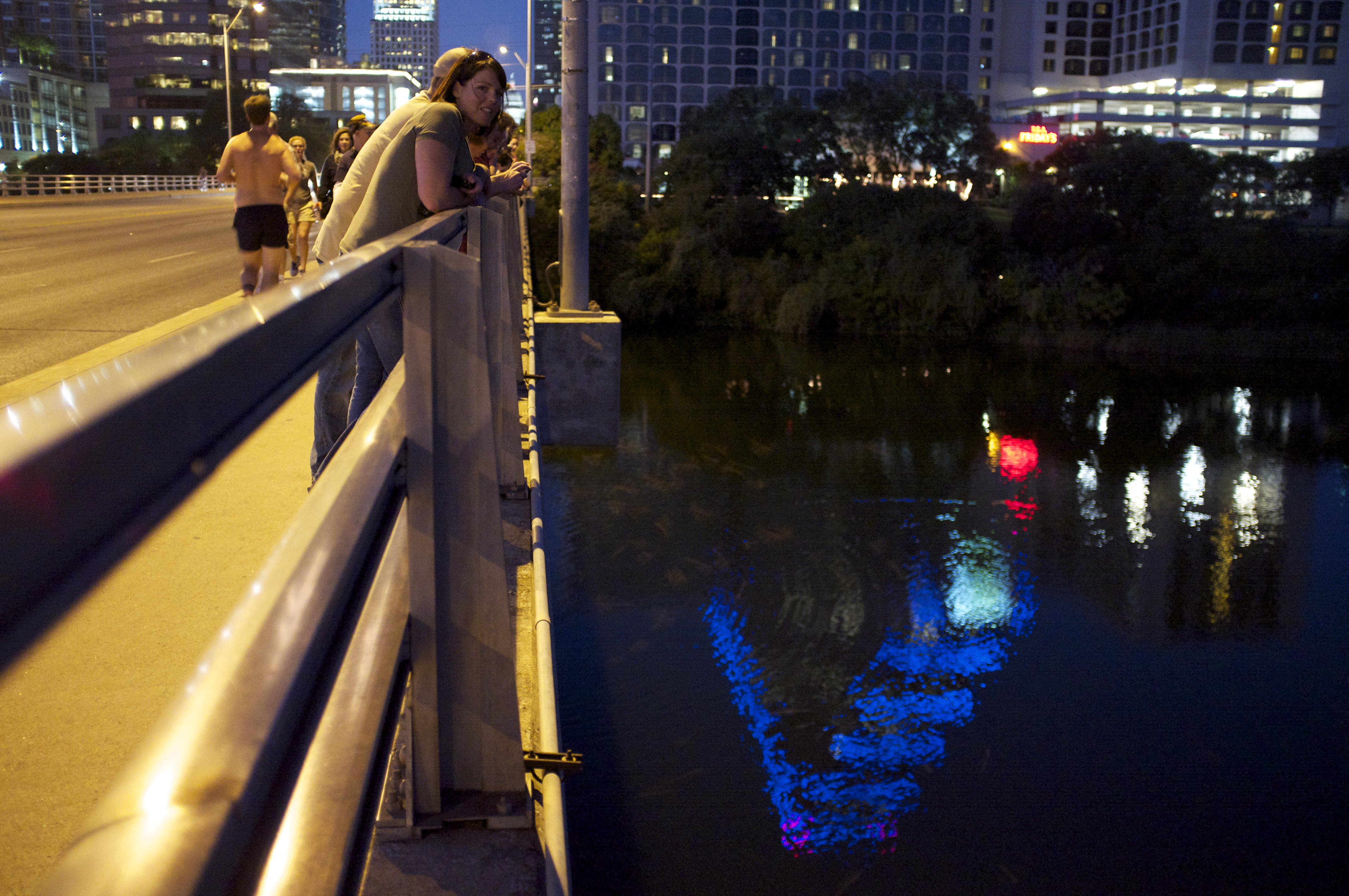
From about mid-March to early November, roughly 1.5 million Mexican free-tailed bats live under the Congress Avenue Bridge—the largest urban bat colony in the world, according to Texas Parks and Wildlife. Watch them leave at dusk.

A year on the Austin calendar
| When | What’s happening |
|---|---|
| January–February | Cedar fever, Austin Marathon, and Austin FC’s season start |
| March | SXSW, Rodeo Austin, bats return, wildflowers begin |
| April–May | Bluebonnets, patio season, spring festivals |
| June–August | Pool season, Zilker Summer Musical, early-morning everything |
| September–October | Texas football, ACL Music Festival (two October weekends), Formula 1 at COTA |
| November | Texas Book Festival, Austin Studio Tour, cooler patio nights |
| December | Trail of Lights at Zilker Park and neighborhood light displays |
Hill Country day trips
Within about one to two hours: Fredericksburg’s main street and wineries, Wimberley and the Blue Hole, Enchanted Rock’s granite dome, Johnson City and the LBJ Ranch, barbecue in Lockhart, and the lakes around Marble Falls.
To try neighborhoods before you choose one, my weekend events roundups are a good excuse to explore.
Moving from…
Every move is different. Here’s what tends to surprise people depending on where they’re coming from.
California → Austin
Sunshine stays; the tax picture flips
- California’s top state income tax rate is 13.3% in 2026 (Tax Foundation); Texas has none. Your property tax bill will likely be a bigger line than you’re used to.
- There’s no Prop 13 here. Appraisal districts revalue every year; a homestead’s taxable value can rise up to 10% a year, and you can protest.
- Trade earthquake questions for foundation questions. Much of the area sits on clay soil that shrinks and swells, so ask about foundation history, drainage, and watering.
- Austin’s HOME code changes allow up to three homes on many residential lots, so infill and ADUs may pop up nearby.
New York & the Northeast → Austin
Big-city energy, more square feet
- New York’s top state rate is 10.9% in 2026, plus city tax for NYC residents. Texas has no state personal income tax.
- Most people drive. Budget for a car (or two), a toll tag, and a garage or driveway that actually fits it.
- Basements are rare—most homes sit on a concrete slab—and HOAs are common in newer neighborhoods. Read the rules before you fall for the yard.
- Winters are short. Your big seasonal bill is summer air conditioning, not heating oil.
Chicago & the Midwest → Austin
Swap snow shovels for shade trees
- Illinois has a 4.95% flat income tax in 2026; Texas has none. Property taxes will feel familiar—check the exact rate stack for each address.
- Hard freezes are rare but real. After the February 2021 winter storm, plenty of buyers ask how pipes are insulated and where the water shut-off is.
- Spring storms can bring hail, so ask about roof age, material, and the insurance deductible for wind and hail.
- Home styles lean single-story ranch and newer two-story builds rather than bungalows with basements.
Colorado & the Mountain West → Austin
Trade altitude for lakes and limestone
- The outdoor culture travels well: greenbelt trails, cycling routes into the Hill Country, and paddling on Lady Bird Lake.
- The Highland Lakes, including Lake Travis, are reservoirs managed by LCRA, so lake levels rise and fall with rain and drought.
- West of Austin, many homes sit where neighborhoods meet wildland. Ask about wildfire risk, defensible space, and insurance before you choose a lot.
- Summer is the season to plan around—early-morning rides and swims become a way of life.
Your moving timeline
3–6 months before
- Decide whether you’ll rent first, buy first, or sell first. If your Austin purchase needs money from your current home, plan that timing with your lender. See buying before you sell.
- Talk to a lender about your new income, start date, and documentation. Many lenders can look at rent and utility payment history if your credit file is thin.
- Visit for a long weekend: drive your commute on a weekday morning and spend an evening in two neighborhoods you’re considering.
- Start your shortlist. I can send homes or rentals that fit, including off-market options when they’re available.
60–90 days before
- Check the school district and campus for each exact address with that district, and ask about enrollment dates.
- Get homeowners or renters insurance quotes and confirm flood risk for every address on your shortlist.
- Get moving quotes, and confirm the mover is licensed with TxDMV for moves within Texas or with FMCSA for interstate moves.
- Request medical, dental, school, and veterinary records.
30 days before
- Ask your landlord or seller for the utility providers at your new address, then set up electricity, water, trash, gas, and internet.
- File a USPS change of address and update your bank, employer, and subscriptions.
- Order a toll tag (TxTag or another compatible tag) if you’ll use SH 130, SH 45, 183A, or the MoPac express lanes.
Moving week
- Plan the truck for early morning—summer afternoons often top 95°F.
- Pack a first-night box, and find your new home’s water shut-off and breaker panel.
Within 30 days of arriving
- Get Texas auto insurance that meets state minimums.
- If you live in Travis or Williamson County, pass an emissions test. Texas ended safety inspections for most non-commercial vehicles in 2025.
- Title and register your vehicle at your county tax office to avoid penalty fees. TxDMV’s new resident checklist walks through the steps.
Within 90 days
- Get your Texas driver license or ID at a DPS office. DPS’s new resident guide lists what to bring; book ahead, and bring proof that your vehicles are registered in Texas.
- Register to vote in your new county at least 30 days before the next election through VoteTexas.gov.
- Find your doctor, dentist, vet, and your neighborhood H-E-B.
After you buy
- File your homestead exemption with your county appraisal district (generally by April 30).
- Watch for your appraisal notice in spring and protest if the value looks off.
- Keep your closing documents, warranties, and inspection report in one place.
Rent first or buy right away?
Both can be smart. Renting first gives you time to learn the commute and find your favorite taco spot before you commit. Just add up the whole lease, deposits, storage, and a second move. Buying right away can save a move if you know the area and your finances are solid. With 6.2 months of inventory in October, many buyers had room to negotiate on price, repairs, or a rate buydown. Seller concessions are negotiated, never promised.
Not sure where to start? Tell me what you need and I’ll send you a shortlist, including off-market options when they’re available.
My read: give yourself a soft landing
VERONICA’S INTERPRETATION · NOT MARKET DATA
The people who love Austin fastest are usually the ones who didn’t rush the map. If you can, spend a weekend or two here before choosing: drive your commute on a weekday morning, grab dinner in two neighborhoods you’re considering, and see what a summer afternoon feels like on the street you like.
From what I see in the current numbers, buyers have more choice and more negotiating room than a few years ago. But that doesn’t mean every home or area is a deal, and future prices still depend on interest rates, inventory, jobs, construction, and buyer demand. I’d rather help you find the home your budget is comfortable with than chase a headline.
What this means for you
- First-time buyers: Get pre-approved early and ask about Texas first-time homebuyer programs. If your credit history is short or bruised, ask lenders about programs that look at rent and utility payments.
- Families: Choose the address before you settle on a school, and confirm enrollment with the district for the year you’ll start.
- Downsizers and retirees: Ask the appraisal district about the additional exemption and school-tax ceiling for owners 65 and older, and look closely at single-story and low-maintenance options.
- Investors: October lease listings fell sharply while rents held steady. Run the numbers at today’s rates, taxes, and insurance before relying on rent growth.
- Luxury and lake buyers: Budget extra time for surveys, septic, wildfire and flood review, and insurance on Hill Country and waterfront homes.
Sources reviewed
Reviewed November 16, 2026. Market figures are from the October 2026 Unlock MLS Central Texas Housing Report. No neighborhood price bands, commute times, school rankings, or safety rankings are claimed in this guide.
- Unlock MLS: October 2026 Central Texas Housing Report: sale prices, county results, inventory, close-to-list, and rents.
- Travis County: Truth-in-Taxation rate table: 2026 adopted rates for Austin ISD, City of Austin, Travis County, Central Health, and ACC.
- Texas Comptroller: Property tax exemptions: $140,000 school homestead exemption, filing deadline, and the homestead cap.
- Texas.gov: Texas taxes: no state personal income tax; sales tax rates.
- Tax Foundation: State income tax rates, 2026: California, New York, and Illinois rates.
- Opportunity Austin: Major employers.
- Workforce Solutions Capital Area (Texas Workforce Commission data): September 2026 unemployment rates.
- Texas.gov: Moving to Texas: driver license (90 days), vehicle registration (30 days), and voter registration.
- Texas DPS: New residents’ driver license guide.
- TxDMV: Vehicle title and registration checklist for new Texans: emissions counties and steps.
- Texas DPS: Vehicle safety inspection changes (January 2025).
- NOAA NCEI: 1991–2020 monthly normals, Austin Camp Mabry.
- LCRA: Managing floods in Flash Flood Alley.
- FloodSmart (NFIP): Buying flood insurance: the 30-day waiting period and coverage.
- Texas flood map (map.texasflood.org): statewide floodplain layers, gauges, and current conditions.
- Texas A&M Forest Service: Cedar fever season.
- City of Austin: Visit Barton Springs Pool and Zilker Metropolitan Park.
- Texas Parks and Wildlife: Congress Avenue Bridge bats.
- Texas Education Agency: TXSchools.gov: campus and district accountability data.
- Power to Choose (Public Utility Commission of Texas): retail electricity plans where available.
- CapMetro: transit routes and schedules.